
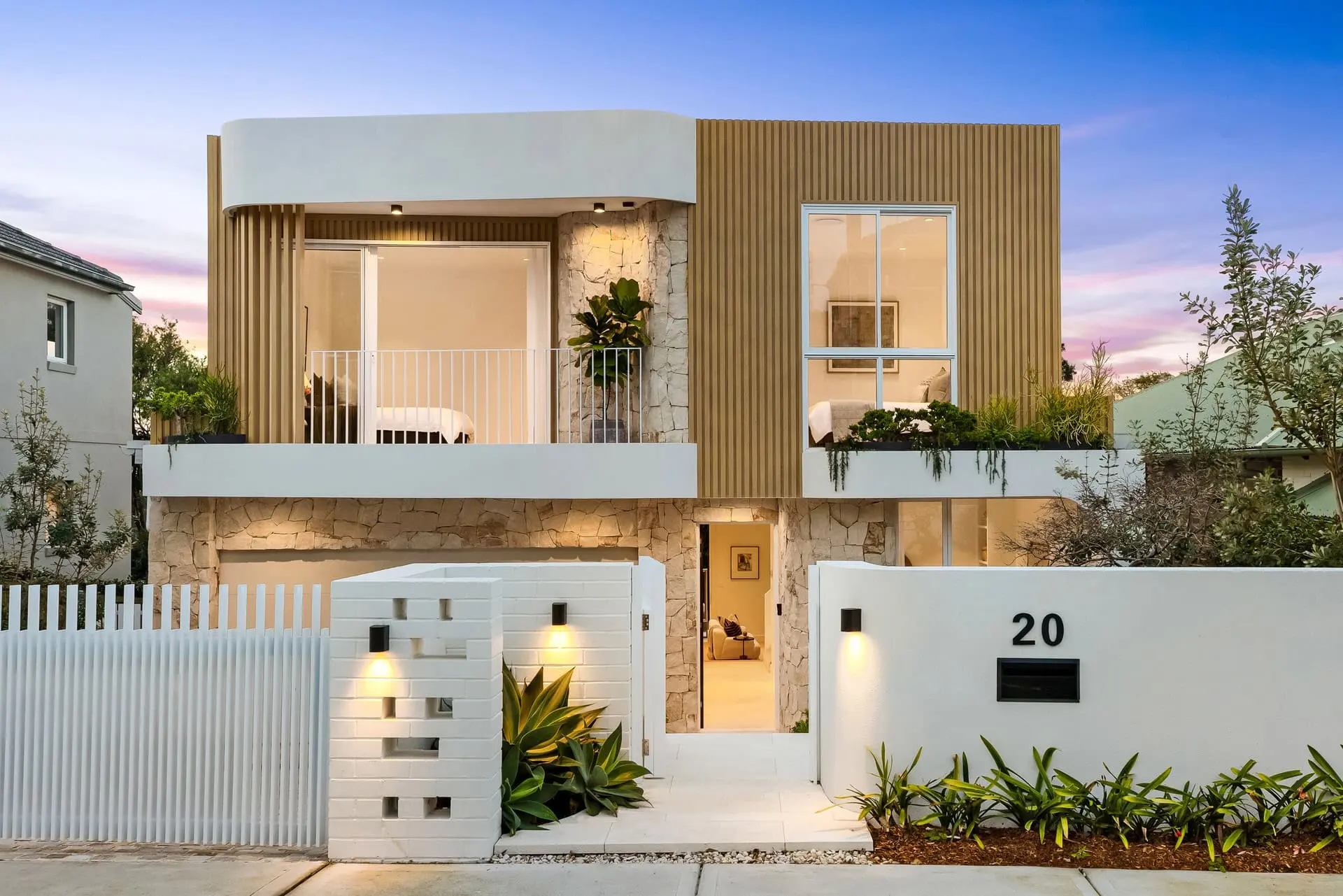
CDC vs DA is one of the first questions North Shore homeowners ask when planning a new home. In short, a development application (DA) is assessed by council on its merits, while a complying development certificate (CDC) is a faster approval for homes that meet every fixed rule in the state planning code. Heritage streets, sloping blocks and bushland mean many North Shore sites need extra care.
At Icon Homes, our North Shore builders like to settle the pathway early, so your design is shaped around it from day one. This article outlines approval pathways for a new home on Sydney’s North Shore; read on.
Article summary
- A DA is assessed by council on its merits, while a CDC is a quicker approval for homes that meet every state code standard.
- A CDC suits straightforward sites, and one missed standard sends a project down the DA route.
- Heritage, bushfire risk, zoning, slope and lot shape can rule out a CDC on the North Shore.
- Neither pathway is better in general, as the right one depends on your block and design.
- Checking the pathway before design starts helps avoid redesigns and delays.
- Icon Homes builds new custom homes on the North Shore and can talk through what your block may need.
What are a DA and a CDC?
A development application is a request for council consent, assessed on its merits against local planning controls. A complying development certificate is a combined planning and construction approval for straightforward projects that meet set standards. According to Cessnock City Council, a CDC can be issued by either council or a private certifier.
In our experience, a construction certificate follows a DA before building starts. A CDC rolls both approvals into one step, but the design has to fit the rules exactly as written.
CDC vs DA: how the two pathways compare
The main difference between a CDC and a DA is how your plans are judged. A DA is a merit assessment by council. A CDC is a check against fixed standards, and your design either meets every one or it does not. The table shows how they compare.
| Feature | DA | CDC |
|---|---|---|
| Who decides | Local council | Council or an accredited private certifier |
| How plans are assessed | On merit against local controls | Against fixed standards in the state code |
| Design flexibility | Greater, as council considers the whole proposal | Limited, as every standard must be met |
| Heritage land | Council assesses the heritage impact | Not permitted on most heritage items and restricted in conservation areas |
| Bushfire risk | Assessed with extra bushfire information where required | Not allowed on high-risk land such as BAL-FZ or BAL-40 |
| After approval | A construction certificate is needed before building | Planning and construction approval combined |
| Typical speed | Generally longer | Generally faster |
The table draws on guidance from NSW Planning, Ku-ring-gai Council and Lake Macquarie City Council.
When a CDC may suit a new North Shore home
A CDC may suit a new home on a straightforward block where the design meets every standard in the state Housing Code. According to NSW Planning, those standards cover building height, gross floor area, boundary setbacks, landscaped area and privacy.
This pathway tends to suit a regular lot with no heritage listing and a lower bushfire rating. Dubbo Regional Council states that a CDC application must be 100 per cent compliant with its applicable standards.
For a custom home, that can mean trimming the design. If the architecture is what makes the home yours, a DA may serve it better.
When a DA is likely to be needed
A DA is likely to be needed when a site or design falls outside what the state code allows. On the North Shore, common triggers include heritage controls, bushfire risk, zoning, slope and lot shape. Council then assesses the whole proposal on its merits.
Zoning and local council controls
Zoning and local controls set what can be built on your block and how. Councils such as Ku-ring-gai publish their own local environmental plan and development control plan, and these shape the pathway before design begins.
Controls can differ between councils, such as Lane Cove and Ku-ring-gai. Icon Homes builds across the North Shore, and we check the local controls for your street before plans are refined.
Heritage controls on the North Shore
Heritage controls protect places of historic significance, and they limit the fast-track pathway. According to Ku-ring-gai Council, complying development is not permitted on the land of most heritage items and is restricted within heritage conservation areas, because certifiers are not set up to assess heritage impact.
A new home on heritage land is typically assessed through a DA.
Bushfire risk and your building site
Bushfire risk is rated by Bushfire Attack Level (BAL), which sets construction standards for homes near bushland. According to Lake Macquarie City Council, complying development is not allowed on high-risk land rated BAL-FZ or BAL-40, and lower ratings need a BAL assessment certificate.
If your block backs onto bushland, check its bushfire rating early.
Setbacks, height and lot constraints on a new home
Setbacks, building height and lot shape decide how much of your block you can build on. NSW Planning lists height, floor area and boundary setbacks among the Housing Code standards, and a design that misses one of them moves to the DA pathway.
Sloping blocks are common across the upper and lower North Shore, and are best approached with sloping block builders who plan around the land.
Why the approval pathway belongs in early design
The approval pathway shapes what your home can look like, so it is best considered before design begins. Settling it early helps you avoid redesigns and plan a realistic timeline.
At Icon Homes, we start with a site assessment, including a site visit, a contour survey and a bore hole report. That groundwork shows whether your block points towards a DA or a CDC.
Questions worth settling before design starts:
- Is the land heritage listed, or inside a conservation area?
- What is the bushfire rating of the block?
- What do the zoning and local council controls allow?
- How do the slope, lot shape and setbacks affect the footprint?
“The best approval outcomes start with a conversation about the block, not the plans. When we understand the land and the council controls first, the design can be ambitious and still sit comfortably within the rules.”
– Adam Crawford, Director
Frequently asked questions about CDC vs DA
These answers cover further questions about CDC vs DA for a new home. They are general guidance only, and your council or certifier can confirm what applies to your block.
Can I withdraw a CDC application if my design does not comply?
Not once it is lodged. Legislation does not allow a CDC application to be withdrawn, only approved or refused. A non-compliant design would instead go through a DA, so confirm compliance first.
How do I find out if my block is heritage listed?
Ask your council for a Section 10.7 planning certificate. Ku-ring-gai Council recommends this certificate to confirm whether land is a heritage item or in a conservation area.
What is a pre-DA consultation, and is it worth it?
It is written advice from council on your concept before you lodge a DA. It can save time, money and uncertainty, because you get only one opportunity to amend a proposal during DA assessment.
Does the approval pathway affect how long my build takes?
Council regulations are one of several factors that can influence a custom build’s schedule. Builds typically take between eight and 18 months, depending on the project.
Not sure which pathway your block needs?
Working out DA or CDC for your block does not have to feel daunting. Icon Homes is a local team that builds new custom homes on the North Shore, and we are happy to talk through what your block may need before you commit to a design.
Bring your address and your questions, and start a conversation with our team at Icon Homes. No pressure, just honest answers.
This article offers general information only and should not be relied upon as professional, technical, or regulatory advice. Requirements and best practice vary. Please consult a suitably qualified professional before acting on any information provided here.
