
Some of the most beautiful streets on Sydney’s North Shore — leafy, established, full of character — sit inside a heritage conservation area (HCA). If your block is one of them, you’ve probably been told, or assumed, that a knock-down rebuild is off the table.
The reality is more nuanced. Being in a heritage conservation area doesn’t automatically rule out a rebuild — but it does change the rules, the approval pathway and what your new home is allowed to look like. Here’s an honest guide to what’s actually possible, written for North Shore owners weighing up their options.
First, know which kind of “heritage” applies to your block
This is the single most important distinction, because it changes everything that follows. There are three broad situations:
– **Individually heritage-listed.** Your specific property is listed as a heritage item on your council’s Local Environmental Plan (LEP). Demolition here is very difficult and rarely approved.
– **Within a heritage conservation area.** Your home isn’t individually listed, but it sits in an area protected for its collective historic character. This is the most common situation on the North Shore — and it’s where a rebuild may well be possible.
– **Neither.** Your block is close to character homes but isn’t listed or in an HCA, which gives you the most freedom (and may even keep the fast-track approval pathway open).
Within an HCA, councils also tend to distinguish between **contributory** homes (which add to the area’s heritage character) and **non-contributory** ones (which don’t). That distinction heavily influences whether demolition will be approved.
Can you actually demolish the existing home?
This is the question everyone wants answered, so here it is plainly: it depends on whether your home contributes to the heritage significance of the area.
Demolishing a home that **contributes** to an HCA’s character is generally contrary to council controls and is unlikely to be approved. Demolishing a **non-contributory** home — one that doesn’t add to, or even detracts from, the streetscape — is often viable, provided what you put in its place is sympathetic to the area.
Importantly, demolition in an HCA is controlled even for non-contributory buildings, so you can’t simply knock down and start fresh without approval. Every case turns on the specifics of your home and street, which is why an early, honest assessment matters before you fall in love with a design.
Why you’ll need a DA, not a CDC
For a standard knock-down rebuild outside heritage areas, many homeowners can use a **Complying Development Certificate (CDC)** — a faster, private-certifier approval. Inside a heritage conservation area, that pathway is not available. Heritage-listed properties and homes within HCAs are excluded from complying development, which means you’ll need to lodge a **Development Application (DA)** with your council.
A DA is assessed on its merits, including its heritage impact, and allows for the kind of design discussion a heritage setting requires. (If you’d like the full comparison, see our explainer on the [difference between a DA and a complying development certificate](https://iconhomes.com.au/what-are-the-key-differences-between-a-development-application-and-a-complying-development-certificate/).) It’s a more involved process — but it’s a well-trodden one, and a builder who knows the local councils can guide you through it.
What a Heritage Impact Statement is — and why it’s your friend
Any DA affecting a heritage conservation area will need a **Heritage Impact Statement (HIS)**. It sounds bureaucratic, but it’s really just a document that explains your home’s place in the streetscape and demonstrates that your proposed new build won’t detract from the area’s character.
A good HIS identifies the heritage significance of the area, describes the existing home, details your proposed design and materials, and shows how the new home responds sympathetically to its setting. Done well, it’s the thing that gets a thoughtful design across the line — so it’s worth investing in properly rather than treating it as a box to tick.
Designing a home that gets approved
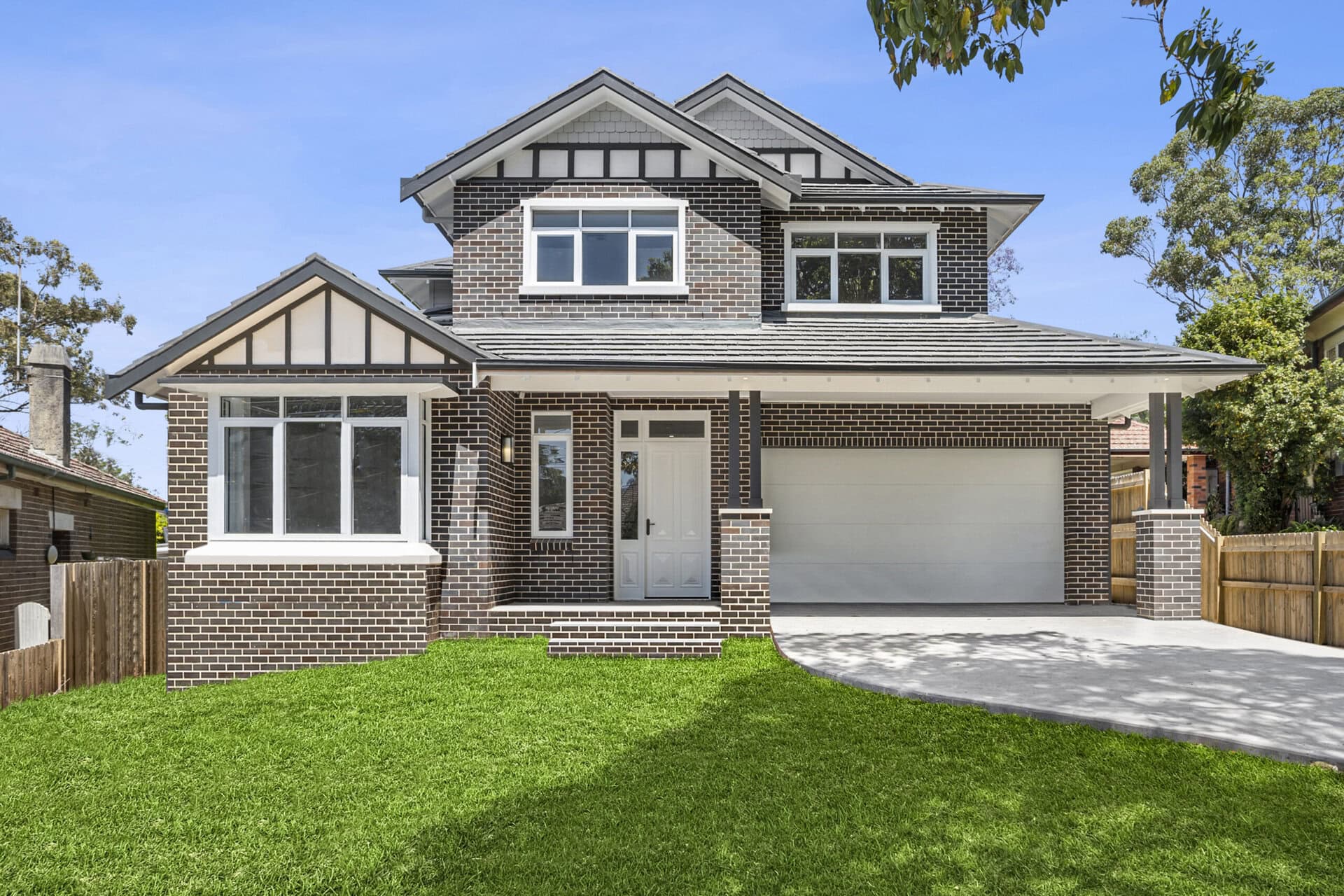
Here’s the part that surprises people: a sympathetic design does **not** mean copying a heritage style or building a replica. Councils are generally looking for a new home that sits comfortably in the street — similar in scale, roof form and façade proportions, using materials that sit well alongside neighbouring homes.
That leaves real room for a refined, contemporary home, as long as it respects its context. This is exactly the kind of brief our design team enjoys: working within the character of a street to create something that feels both fresh and at home. You can see how we approach context-sensitive design across our [portfolio](https://iconhomes.com.au/portfolio/).
How long does it take, and what should you expect?
Because an HCA rebuild goes through a DA rather than a CDC, you should plan for a longer approval period — commonly in the order of several months, and longer again for complex or sensitive sites. (Timeframes vary by council and project; treat this as a rough guide, not a guarantee.)
The upside is certainty of a different kind: a well-prepared, sympathetic application that engages with council early tends to move more smoothly than one that fights the controls. Our overview of the knock-down rebuild process walks through the broader stages once approval is in hand.
How to check your block‘s status
Before you do anything else, find out exactly where your block stands. You can check whether your property is heritage-listed or within an HCA through your council’s Local Environmental Plan and heritage maps — the North Shore spans several councils, each with its own controls. A quick call to your council’s duty planner, or an early conversation with a builder who works across these areas, will tell you which of the three situations above applies to you.
Frequently asked questions
Can I knock down a house in a heritage conservation area?
Sometimes. If your home is non-contributory and your new design is sympathetic to the area, demolition and rebuild may be approved via a DA. If your home contributes to the area’s character, or is individually listed, demolition is much less likely.
Do I need council approval, or can I use a CDC?
You’ll need a Development Application. The fast-track CDC pathway isn’t available for properties in heritage conservation areas or for heritage-listed homes.
Does my new home have to look heritage?
No. Councils generally want a home that’s sympathetic in scale, form and materials — not a replica. A well-considered contemporary home can absolutely be approved.
How do I find out if my block is affected?
Check your council’s LEP and heritage maps, or ask your council’s duty planner. A local builder can also help you interpret what applies to your site.
Talk to a builder who knows the North Shore
Heritage areas reward experience and a careful approach — and they’re exactly where local knowledge pays off. If you’d like an honest read on what’s possible for your block, get in touch. We’ll tell you straight whether a rebuild stacks up, and how to give it the best chance of approval.
